Nevus of Ota / ADM
What is Hori’s Nevus (ADM)? Why is it different from ordinary pigmentation?
Our physician’s Documented ADM Cases
The following four cases were personally treated by our physician at our Nanjing clinic and are shared with signed media release authorization. ADM involves deep dermal pigmentation; treatment courses are lengthy and individual responses vary. Actual outcomes are assessed through in-person consultation.
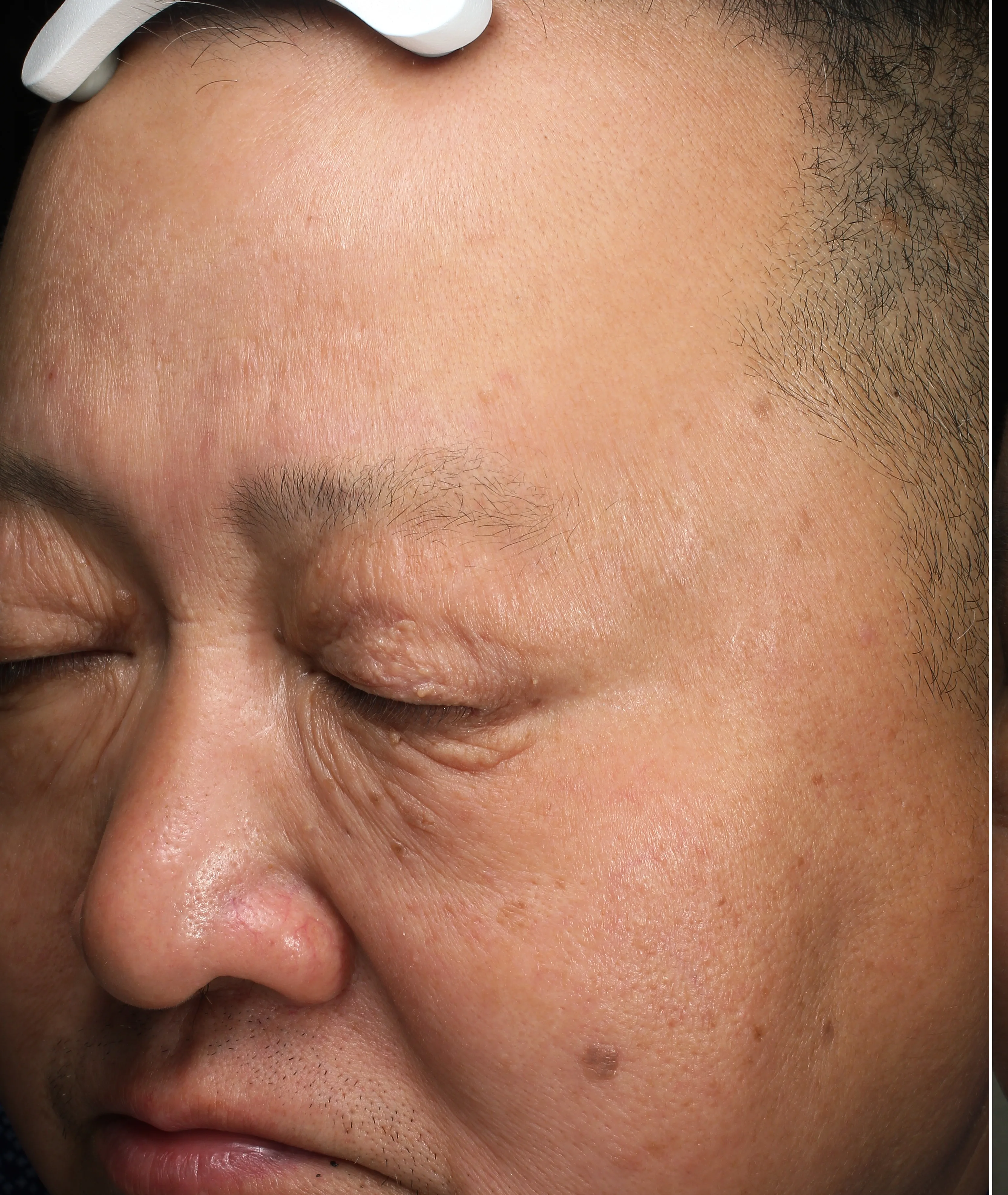
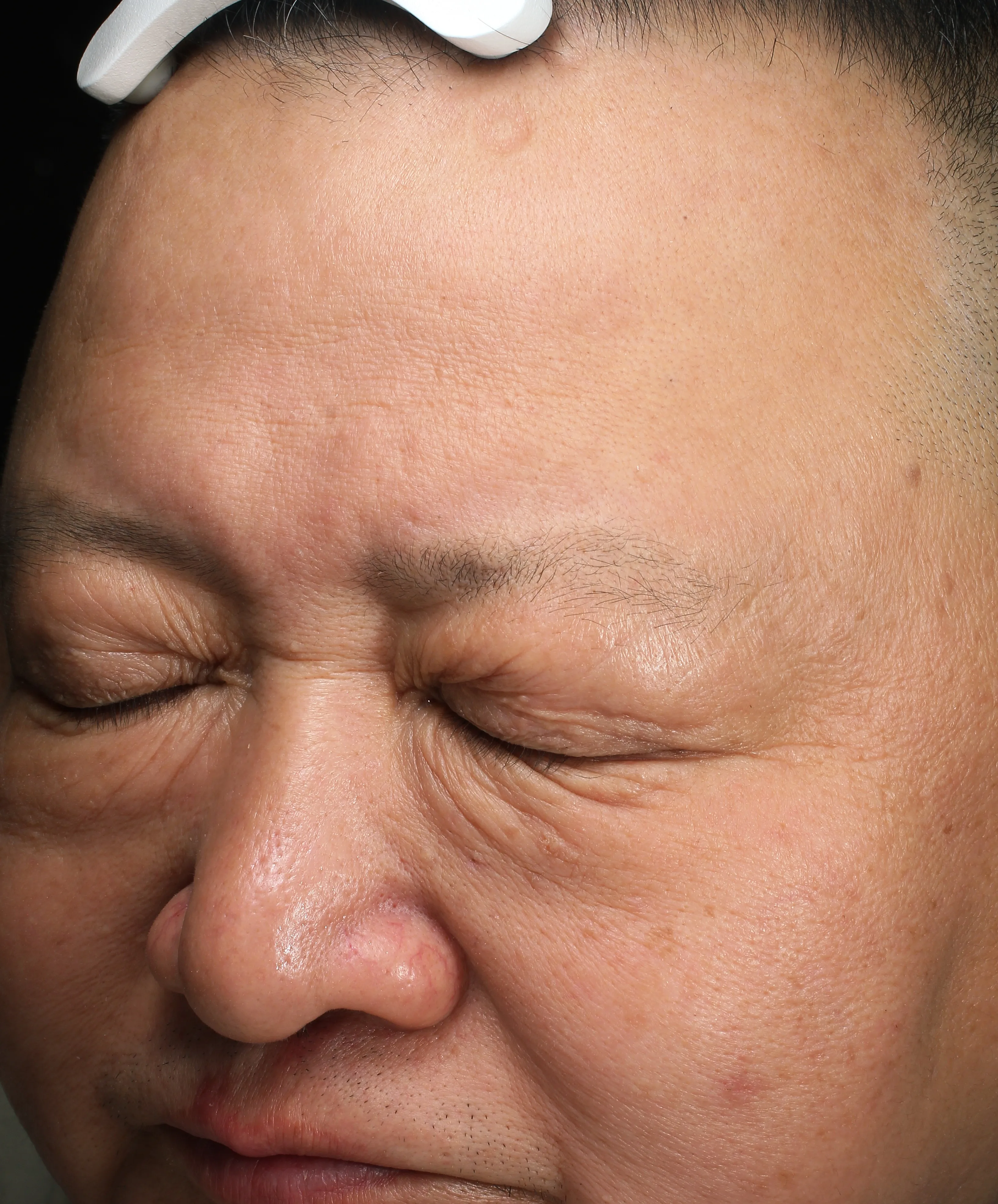
Case 8 · Nevus of Ota / Hori’s Nevus — Real Patient Documentation
- Patient profile
- Asian Female · Fitzpatrick IV
- Key concerns
- Nevus of Ota / Hori’s Nevus (Comprehensive Improvement with Multi-Modal Combination Approach)
- Treatment plan
- Dual picosecond combination therapy + Pico® brightening & skin rejuvenation + PicoSure® + PicoSure Pro® and 5 additional modalities (multiple sessions within 3 months)
- Degree of improvement
- Hori’s Nevus / ABNOM — significant improvement · natural overall result
- Post-treatment darkening (PIH)
- No PIH
- Maintenance
- PRP Quarterly × 1 + Ultherapy 18-Month Maintenance + Strict Sun Protection
Case 08: Nevus of Ota / ADM Before & After · Asian Female · Fitzpatrick IV · Multimodal combination protocol led by our physician, at Luowei Medical Aesthetics Clinic, Nanjing
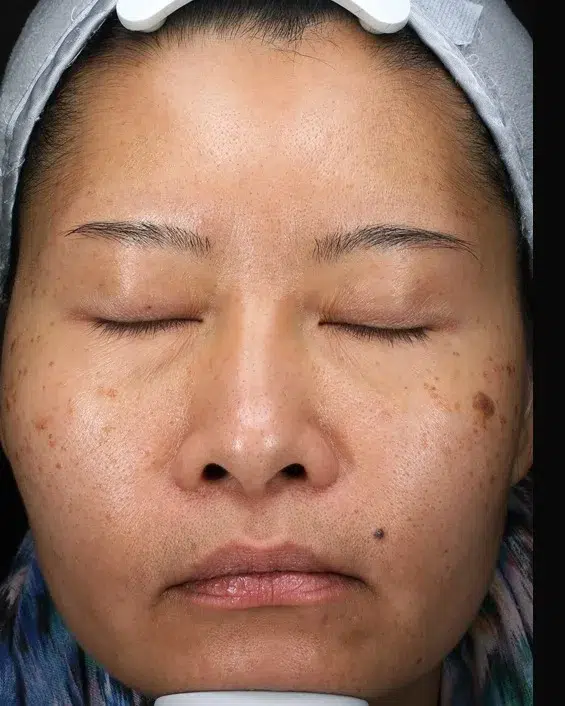
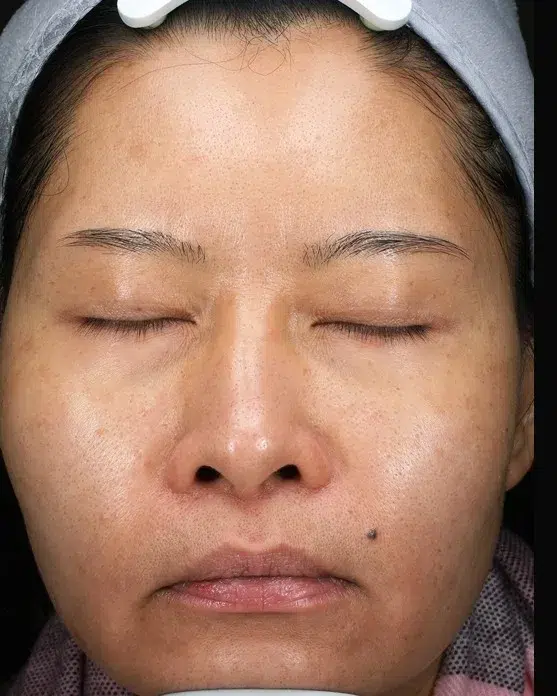
Case 52 · Nevus of Ota / ADM — Documented Case
- Patient profile
- Asian Female · Fitzpatrick IV
- Key concerns
- Nevus of Ota / Hori’s Nevus (Comprehensive Improvement with Multi-Modal Combination Approach)
- Treatment plan
- Dual picosecond combination therapy + PicoSure® + PicoSure Pro® + PicoWay® (multiple sessions within 3 months)
- Degree of improvement
- Hori’s Nevus / ABNOM — significant improvement · natural overall result
- Post-treatment darkening (PIH)
- No PIH
- Maintenance
- Routine sun protection + monthly at-home skincare + quarterly assessment
Case 52: Hori’s Nevus / ABNOM Before & After · Asian Female · Fitzpatrick IV · Multi-modal combination protocol led by our physician at Luowei Medical Aesthetics Clinic, Nanjing
What is Hori’s Nevus (ADM)? Why is it different from ordinary pigmentation?
Hori’s Nevus (also known as Acquired Dermal Melanocytosis (ADM))is a condition in which intrinsic melanocytes within the dermis Activated in adulthood appearing bilaterally and symmetrically over the cheekbone area Blue-grey / blue-black Focal pigmentary disruption. It is not a superficial epidermal pigment spot, but rather a condition originating in the mid-to-superficial dermis Deep-layer pigmentation condition, Frequently misdiagnosed as melasma or sunspots, yet the treatment approach is entirely different.
Why is IPL not suitable for treatment?
IPL Primarily targets Superficial epidermal pigment, ADM pigment resides in the superficial-to-mid dermis. IPL treatment only heats the epidermis, which risks triggering PIH without reaching the dermal layer — making it largely ineffective for ADM and potentially worsening the condition.
Why does the pigmentation appear blue-grey?
This is Tyndall effect: Brown melanin located deep in the dermis appears blue-grey after scattering through the epidermis. This is why ADM presents not as dark brown spots but as blue-grey patches — the most characteristic visual sign of this condition.
Why does this condition occur more frequently in Asian women?
Hori’s Nevus At East Asian women ADM has the highest prevalence among East Asian populations, linked to genetic predisposition, estrogen levels, and the reactivity of dermal melanocytes. Male cases are less common; the peak age of onset is between 30 and 50.
Why is Wood’s lamp examination essential for diagnosis?
ADM closely resembles melasma, Hori’s nevus, and post-inflammatory hyperpigmentation (PIH) in appearance. Wood’s lamp examination in a darkened room, combined with dermoscopy analysis, is essential to confirm pigment depth — which directly determines whether 755 nm or 1064 nm is appropriate, and the overall treatment course.
Clinical note:Clinically, 30% of clients who come in seeking melasma treatment are reclassified as ADM or mixed ADM after Wood’s lamp examination. The two conditions require fundamentally different treatment approaches — misdiagnosing ADM as melasma and applying the wrong protocol is the primary reason cases remain stubbornly “untreatable.” Our physician’s protocol The first step is always accurate classification.
Five Root Causes of Zygomatic ADM — It’s Not Simply “Something That Appeared”
ADM Unlike sun spots and freckles, it originates from Delayed activation of intrinsic melanocytes within the dermis. Clinically, the condition manifests through the accumulation of multiple contributing factors.
1. Embryonic remnant of dermal melanocytes
During embryonic development, certain melanocytes fail to complete their migration and become arrested in the superficial-to-mid dermis. In adulthood, internal and external triggers “awaken” these cells, stimulating pigment production — this is the central pathophysiology of ADM.
2. Hormonal fluctuation (estrogen)
ADM shares some hormonal susceptibility with melasma. Pregnancy, oral contraceptives, and hormone replacement therapy (HRT) can all accelerate the activation of dermal melanocytes. This explains why the condition is significantly more prevalent in women than in men.
3. Chronic UV accumulation
UVA UV radiation penetrates into the dermis, where cumulative exposure gradually awakens dormant dermal melanocytes and stimulates pigment production. The wide seasonal temperature variation and high UV index in North America, combined with generally lower sun-protection awareness among Asian patients, are important environmental contributors to the development of ADM.
4. Genetic predisposition
Those with a positive family history tend to develop the condition earlier, with deeper pigmentation and larger affected areas.
5. Compromised skin barrier / chronic inflammation
Chronic skin barrier impairment — from over-exfoliation, topical corticosteroid use, or inappropriate energy-based treatments — can accelerate the visible progression of ADM and increase the risk of PIH during treatment.
4 Types of pigmentation commonly confused with ADM — key differential diagnosis points
ADM It is one of the most frequently misdiagnosed pigmentary conditions in Asian faces. The table below outlines the 4 most common differential diagnoses encountered in our physician’s clinical practice.
Melasma
Melasma · Melasma
| Distribution | Patchy distribution across the cheeks, forehead, upper lip, and chin |
|---|---|
| Morphology | Brown patches with indistinct borders |
| Pigment color | Light brown to dark brown (epidermal type) |
| Depth | Epidermal / superficial dermal / mixed |
| First-line treatment | PicoSure Pro 755nm Low fluence |
Nevus of Ota
Nevus of Ota · Congenital
| Distribution | Unilateral distribution along the trigeminal nerve (periorbital / temporal) |
|---|---|
| Morphology | Patch-like with ill-defined borders |
| Pigment color | Blue-black / dark grey |
| Depth | Deep dermis, appearing at birth or during adolescence |
| First-line treatment | Q-switched Nd: YAG 1064 / PicoWay multi-session |
Post-inflammatory hyperpigmentation (PIH)
Post-Inflammatory Hyperpigmentation
| Distribution | Pre-existing inflammation / acne marks / areas of prior mismanagement |
|---|---|
| Morphology | Irregular patches, asymmetrical |
| Pigment color | Brown / dark brown |
| Depth | Epidermal + superficial dermal |
| First-line treatment | Barrier repair + ultra-low energy Pico |
Sun spots / Age spots (Solar Lentigo)
Solar Lentigo
| Distribution | Randomly distributed in sun-exposed areas, asymmetrical |
|---|---|
| Morphology | Discrete brown spots with well-defined borders |
| Pigment color | Light brown to dark brown |
| Depth | Epidermis |
| First-line treatment | PicoSure / Q-switched Per session |
⚠️ Caution:ADM More than 20% of our physician’s clinical cases involve a mixed presentation of ADM alongside melasma. If treated solely under a melasma protocol, the deeper ADM component will never improve — leading clients to seek repeated treatments elsewhere and conclude that their pigmentation is simply “untreatable.”Accurate classification → staged treatment approach is the key.
Why does ADM require a Fitzpatrick III–V Asian specialty protocol?
A common blind spot in mainstream North American clinics
ADM Clinical data in Western populations is scarce — ADM is a pigmentation condition that predominantly affects Asian individuals. Most device protocols used at North American medspas are calibrated for Fitzpatrick I–II skin types. Applying these parameters directly to Asian skin creates three core problems:
- ✗ Misdiagnosed as melasma— Unable to identify the deep dermal blue-grey pigment tone
- ✗ Wrong wavelength selection— 532 / 694 nm short wavelengths cannot penetrate to the mid-dermis
- ✗ Excessive energy levels carry a high risk of PIH— Epidermal melanin content is 5–10× higher; overheating the superficial layers
Our physician’s Fitzpatrick III–V Specialist Protocol Adjustments
| Parameters | North American standard | Asian-adjusted protocol |
|---|---|---|
| Primary wavelength | 532 / 694nm | 755 + 1064nm Dual wavelength |
| Fluence (energy density) | 4–6 J/cm² | 2–4 J/cm²(cumulative across sessions) |
| Treatment interval | 4 Week(s) | 6–8 Week(s) |
| Test spot | Optional | Essential |
| Pre-treatment preparation | None | 4 -week barrier repair + sun protection preparation |
Key differentiating factors:Our physician has focused exclusively on Asian faces for over 8 years at our Nanjing clinic, with 90%+ of clients presenting with Fitzpatrick III–V skin types.
ADM 6 treatment options — selected according to pigment depth and pigment load
ADM The core treatment for Picosecond / Q-switched 1064nm. Other devices used as adjuncts.
PicoSure Pro PicoSure Pro®
755nm Short-pulse picosecond, suitable for Superficial-layer ADM and clients with concurrent epidermal pigmentation. Frequently alternated with 1064nm to address different pigment depths.
PicoWay 1064nm PicoWay
1064nm The longer wavelength penetrates into the superficial-to-mid dermis, directly fragmenting the deep pigment particles characteristic of ADM.ADM Gold standard of treatment— Picosecond pulse durations cause significantly less thermal damage to surrounding tissue, making PIH risk considerably lower than with Q-switched lasers.
Q-switched Nd: YAG 1064 nm
A classic deep-pigment laser with strong clearing power for deeply seated ADM particles. Our physician incorporates it as part of a combination approach for dense, deeply pigmented ADM cases where picosecond laser alone is insufficient.
Fotona ClearGlow(FRAC3)
1064nm Long-pulse mode addresses overall skin tone evenness between ADM treatment sessions while stimulating collagen. It offers complementary value for clients with a concurrent vascular component or sensitive skin.
Brightening skin booster injection (glutathione + tranexamic acid)
Used between treatment sessions to accelerate the clearance of fragmented pigment particles while suppressing new pigment formation — helping to shorten the overall treatment timeline.
Cyspera Topical therapy + long-term sun protection
A cysteine-precursor professional topical used continuously throughout the treatment course and maintenance phase to reduce reactivation of dermal melanocytes. Used in combination with iron-oxide physical sunscreen.
Our physician’s 6-Step Standard ADM Protocol
Consultation + Wood’s lamp + Dermoscopic Classification
30 -minute free consultation, Wood’s lamp darkroom examination, dermoscopic assessment of pigment depth and distribution, and VISIA quantitative analysis.Accurate differentiation of ADM, melasma, nevus of Ota, and PIH is essential, No subtype classification, no treatment.
4 weeks of pre-treatment conditioning (skin barrier repair + sun protection preparation)
Topical barrier-repair skincare + Cyspera priming + strict mineral SPF 50+ (with iron oxide). Energy-based treatment begins only once the skin barrier is stabilized, significantly reducing PIH risk.
Test spot(test spot)
A small test area is treated in an inconspicuous region below the cheekbone. Skin response and PIH tendency are monitored over 7–14 days before proceeding with the full protocol.This is an essential step in ADM treatment for Asian skin types— Dermal pigment responses are difficult to predict. The test spot result determines all subsequent protocol parameters.
Active treatment phase (5–10 sessions, once every 6–8 weeks)
PicoSure Pro 755nm Alternated or combined with PicoWay 1064nm; Q-switched add-on available when needed for dense pigment clusters. Immediate post-treatment cold compress and barrier-repair skincare are applied after every session to minimize inflammatory response.
Assessment phase (12 weeks after the primary treatment course)
ADM Dermal pigment clears slowly post-treatment; allow 8–12 weeks to observe the final result. Wood’s lamp re-evaluation and VISIA comparative analysis are used to determine whether additional sessions are needed.
Maintenance phase (assessment every 6–12 months, ongoing)
ADM Recurrence rates are lower than melasma, but long-term annual reassessment, strict sun protection, and Cyspera maintenance are still recommended. Early signs of reactivation can be managed quickly with low-dose touch-up treatments.
Treatment timeline — how long before you see results?
| Type | Primary treatment course | Initial visible improvement | Significant improvement | Maintenance interval |
|---|---|---|---|---|
| Early-stage, lighter ADM | 4–6 Session(s) | After the 2nd session | After the 4th session | Assessment every 12 months |
| Typical ADM | 5–8 Session(s) | After session 3 | After the 6th session | Reassessment every 6–12 months |
| Deep, treatment-resistant type | 8–12 Session(s) | After the 4th session | After session 8 | Reassessment every 6 months |
| ADM Combined with melasma | 10–15 Session(s) | After the 4th session | After session 10 | Assessment every 4–6 months |
Clinical note:ADM is one of the few Asian pigmentation conditions that can remain stable long-term after proper treatment, but Dermal pigment clears slowly, Full results typically take 8–12 weeks to appear after each session. A common mistake among patients is giving up after 2 treatments with no visible change — in reality, the ADM clearance curve usually begins to rise steeply only after the 3rd or 4th session.
Are you a candidate for ADM treatment? A 2-minute self-assessment
✅ Appropriate to begin assessment
- ✓Bilateral symmetric blue-grey / blue-black zygomatic spots persisting for more than 6 months
- ✓30 Asian patients aged 20 · Fitzpatrick III–V
- ✓Previously diagnosed with melasma but treatment has not been effective
- ✓Family members with similar pigmentation
- ✓Committed to a structured 6–12 month treatment protocol
- ✓Willing to commit to strict sun protection and topical maintenance
❌ Requires deferral or resolution of other issues first
- ✗Currently pregnant or breastfeeding
- ✗Sun damage or sunburn within the past 4 weeks that has not fully resolved
- ✗Active facial eczema, acne, or dermatitis
- ✗Isotretinoin use within the past 6 months
- ✗Expecting complete clearance in 1–2 sessions (unrealistic expectation)
- ✗Severe keloid tendency not yet assessed
Luowei Medical ADM Protocol vs. Standard MedSpa
- ✗Diagnosing as melasma at a glance and proceeding with treatment
- ✗Using a single IPL / 532 nm device to treat all types of pigmentation
- ✗Unable to identify the blue-grey tone characteristic of dermal pigmentation
- ✗No test spot performed — full-face treatment on the very first session
- ✗Performed by an RMT or Aesthetician, with no physician consultation
- ✗2-3 Telling patients after a few sessions with no visible change that “it can’t be treated”
- ✗No dermoscopy / Wood’s lamp equipment
- ✓Essential: Wood’s lamp + dermoscopy + VISIA — a three-step diagnostic workup
- ✓755 + 1064 Dual-wavelength synergy for targeting different pigment depths
- ✓Differentiating ADM / Melasma / Hori’s Nevus / PIH
- ✓Essential: test spot + 4-week pre-treatment conditioning protocol
- ✓Directly assessed and performed by our physician
- ✓Understanding that the ADM clearance curve rises sharply after the 3rd–4th session
Why is Luowei Medical Aesthetics Clinic’s approach to ADM trustworthy?
Experience
Expertise Specialty
Authoritativeness Authority
Trustworthiness Reliable
All cases on this page are shared with client authorization via Media Release Form · Clinical records available
About the cost of ADM treatment
Pricing for ADM treatment varies widely between clinics — but the true cost driver is never the device itself. What matters is who performs the assessment, who determines the treatment pace, and how deeply clinical expertise needs to be involved. ADM is frequently misdiagnosed in Asian patients and often coexists with melasma, nevus of Ota, and PIH. Complex cases requiring subtype classification and staged management involve our physician’s direct participation, and the pricing reflects that level of medical input. For early-stage, straightforward ADM or clients who have entered a stable maintenance phase, our trained clinical team can safely execute the protocol under our physician’s plan — a more accessible option for suitable candidates. The price difference in laser treatments fundamentally reflects the clinical experience gap between physician-performed and technician-performed procedures. For all injectable treatments, we require the physician to perform the procedure personally. The right plan for you is determined by your condition — not by price. The specifics will be discussed at your consultation, following Wood’s lamp classification and pigment depth assessment.
- Payment is made at the clinic, after the consultation and before treatment begins
- Nothing is paid in advance, and no deposit is required to hold an appointment
- Cosmetic treatment is a self-pay item and is not covered by public medical insurance in China
- All first-time clients receive a 30-minute Free Consultation & Assessment
Risks & Contraindications — Full Transparency Required
What are the main risks?
1. PIH Post-treatment darkening (PIH)(moderate risk in Asian skin types) — significantly reduced through low-fluence fractionated delivery, test spots, and 4-week pre-treatment; 2. Transient redness / mild swelling (common, resolves in 1–3 days); 3. Pinprick sensation during treatment (well tolerated; cold compress or topical anesthetic available); 4. Rare small blisters / micro-crusting (rare when protocol is appropriate; resolves spontaneously in 1–2 weeks); 5. Residual faint shadowing (stubborn deep pigmentation may require additional sessions).
Who should absolutely not undergo treatment?
Pregnancy, breastfeeding, oral isotretinoin use within the past 6 months, unresolved sunburn within the past 4 weeks, active facial inflammation, a significant history of keloid or hypertrophic scarring that has not been assessed, photosensitive conditions, or unrealistic expectations (such as expecting complete clearance in 1–2 sessions) — in these situations, our physician will recommend postponing treatment or addressing the underlying concern first.
How is the risk of PIH minimized during treatment?
5 core safety measures: (1) a test spot is always performed first; (2) starting energy begins at the lower limit and is gradually increased; (3) sessions are spaced at least 6 weeks apart; (4) strict mineral SPF 50+ (with iron oxide) is required for 4 weeks before and after treatment; (5) immediate post-treatment cooling and barrier-repair skincare are applied — if redness persists beyond 7 days, a follow-up visit is required immediately.
What does the informed consent form include?
Every client is required to sign an informed consent form before their first treatment. It covers: the treatment mechanism, possible adverse reactions and their likelihood, alternative options, criteria for discontinuing treatment, follow-up arrangements, and an optional Media Release. All content is explained in person by our physician — not delegated to administrative staff.
Where the medical claims on this page come from
Everything above about Nevus of Ota / ADM rests on published evidence rather than on our own word. The sources below are the ones behind those statements: peer-reviewed papers indexed in PubMed, and guidance written for patients by dermatology academies and national health services. Read them before you decide — and bring any of them to your consultation.
- Peer-reviewedGuidelines of care for the management of acne vulgaris
- Peer-reviewedPostinflammatory hyperpigmentation: A comprehensive overview: Epidemiology, pathogenesis, clinical presentation, and noninvasive assessment technique
- Peer-reviewedMelasma Treatment: An Evidence-Based Review
- Peer-reviewedChemical peels for darker skin types
- Patient guidanceAcne: Tips for managing
- Patient guidanceMelasma: Treatment
What these references can and cannot tell you. They describe what is known about the treatment itself — how well it tends to work, how long results last, and what can go wrong. They are not an assessment of this clinic, and no published study can tell you whether it suits your skin type, anatomy, or medical history. That judgement comes from the physician who examines you in person, and it may well be “not this one”.