Partner · Aesthetic surgery
Nanjing BenQ Medical Center — Medical Aesthetics Department
A Grade 3A general hospital in Nanjing, affiliated with Nanjing Medical University. This page describes that department: where it sits, what it covers, the equipment it lists, the facilities it publishes and the physician it names.
This page describes the partner department, as it publishes itself — its facilities, its published figures and photographs, and the credentials of its physicians are the department's own. The physicians are the shared part of the partnership: some of the doctors across the five partner departments also work at Luowei, alongside our own medical team. The department is a partner in the clinic's work, not a branch of it.
Who they are
Nanjing BenQ Medical Center is a Grade 3A general hospital — the highest tier in China's hospital classification — and is affiliated with Nanjing Medical University. Its Medical Aesthetics Department sits inside that hospital as a specialty unit, rather than operating as a standalone clinic.
A specialty unit inside a full hospital
That structure is the reason the partnership is useful to us. The department works inside a general hospital, with anesthesiology, inpatient beds, a laboratory, pathology, radiology and emergency cover on site. When a procedure requires any of those, the patient is in the hospital already rather than being transferred to one.
The department is organised into two divisions — aesthetic dermatology and aesthetic surgery — and describes itself as integrating care, research and teaching. Its academic lead is Dr Lu Guiqing, an MD and master's supervisor at Nanjing Medical University.
Staff in the department. The department publishes a team of 36 across its two divisions.
Divisions. Aesthetic dermatology and aesthetic surgery, working as one department.
Hospital tier. China's highest hospital classification, and a Nanjing Medical University teaching hospital.
The figures above are the department's own published numbers. We have not independently audited them, and we would rather say so than present them as verified fact.
What the department covers
The department publishes its work across nine areas and runs twelve condition-specific clinics. Listed here because it is a useful picture of how the department is organised — and because you may be referred into one of these clinics specifically.
Nine areas of practice
- Hair and scalp treatment
- Pigmentation disorders
- Acne, scarring and striae
- Sensitive-skin repair
- Laser and light-based treatment
- Layered anti-ageing
- Aesthetic and reconstructive surgery
- Postpartum recovery
- Weight management and body contouring
Twelve condition-specific clinics
- Hair loss
- Facial ageing
- Pigmented naevi and skin lesions
- Acne, scarring and striae
- Sensitive-skin repair
- Melasma
- Vitiligo
- Scars
- Aesthetic wound closure
- Revision eye and nose surgery
- Abdominoplasty and breast reshaping
- Combined weight management
A clinic name is not a referral promise. Whether a specific clinic is the right route for you is something we work out together first — see how to start.
Surgery that needs hospital-grade support
The department's surgical range is the clearest example of why a hospital partner matters. It runs from routine procedures to operations that require a hospital setting by their nature.
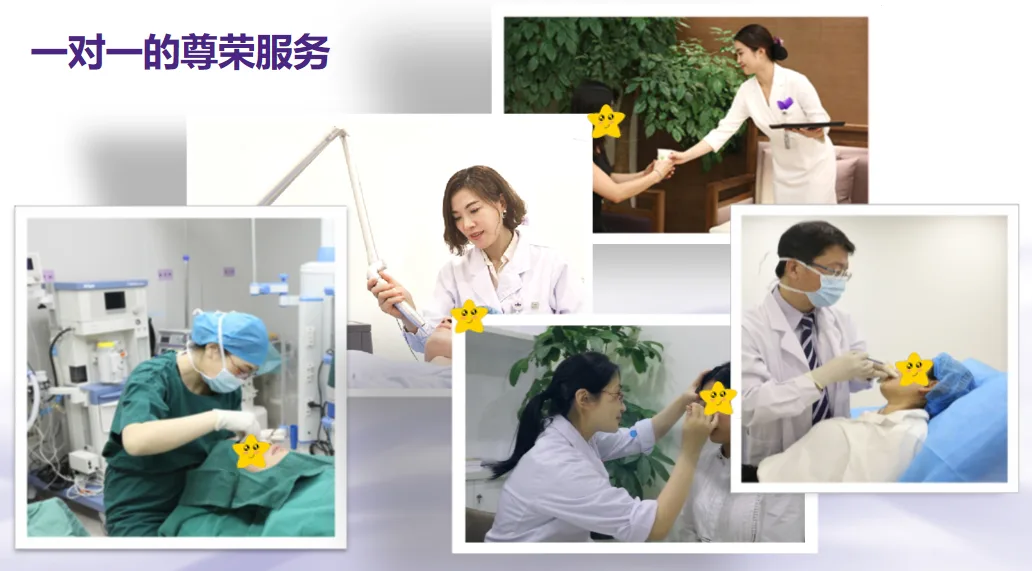
What a hospital setting makes possible
Alongside routine aesthetic procedures, the department performs higher-grade operations — reduction mammaplasty, abdominoplasty, correction of mandibular hyperplasia — and revision work covering eyelid revision, nasal revision, ear deformity repair, and aesthetic closure of traumatic wounds.
In China these are classified as Class III and Class IV procedures, which by regulation require a hospital-grade facility and anesthesiology support. The department delivers them with its own surgical and anesthesiology team.
Teaching and academic base
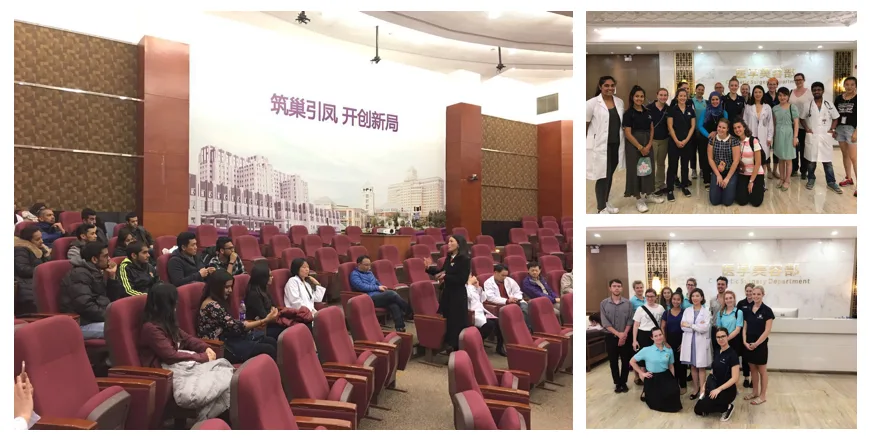
The department is a master's training base for Nanjing Medical University and carries the university's teaching load — theory and clinical instruction, international student tutoring, and postgraduate supervision. It also lists membership of the national and provincial professional bodies in its field, and is a registered national clinical trial site.
Why this matters for a patient
A department that teaches is a department that is used to being examined — by students, by visiting physicians, and at academic meetings. The department hosts and co-hosts conferences in its field, including forums on facial rejuvenation and injectable treatment, scar management, and two sessions of a provincial workshop on scalp ageing and minimally invasive hair transplantation.
We list this because it is the kind of fact that is checkable, and because a teaching hospital department is a materially different setting from a commercial aesthetics chain.
Equipment the department lists
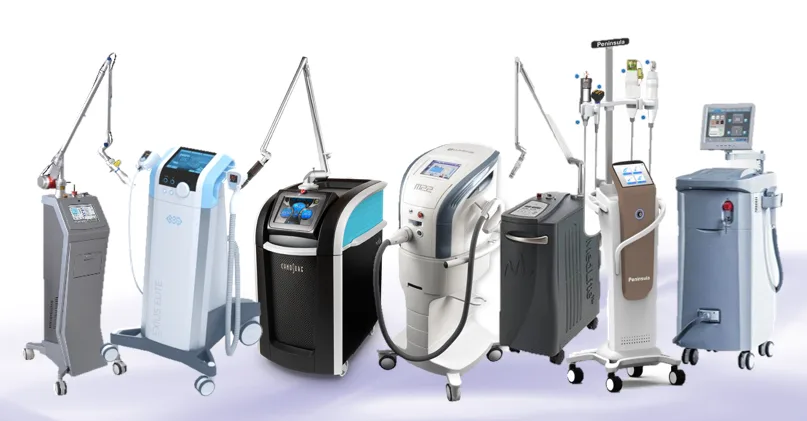
Below is the device list the department publishes on its own pages. We are reporting it as published, not endorsing it: we have not verified the regulatory approval status of each model, and we would rather tell you that than imply a check we have not done.
- Picosecond laser
- C6 laser
- M22 intense pulsed light system
- DPL (dense plasma light) system
- Fractional CO₂ laser
- BTL radiofrequency device
- Gold RF platform
- Gold microneedling platform
- Sensitive-skin treatment device
- Minimally invasive hair follicle transplantation system
Device names here are the department's own wording. If a specific device matters to your decision, ask us — and ask for the registration record. Verifying a device's approval before treatment is a reasonable request and we treat it as one. See also what is licensed in China.
The facilities and the team
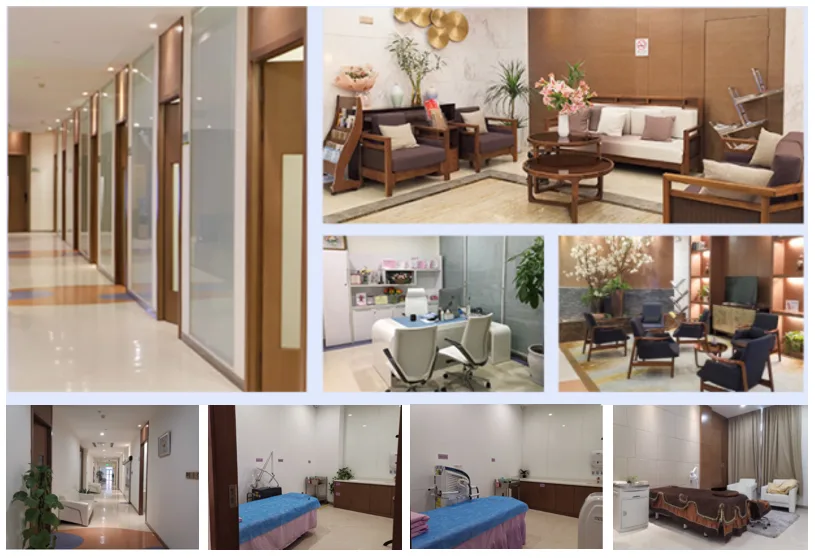
Photographs from the department's own published material. Where an image is a design rendering rather than a photograph, it is labelled as one — we do not think a rendering should pass for a site visit.
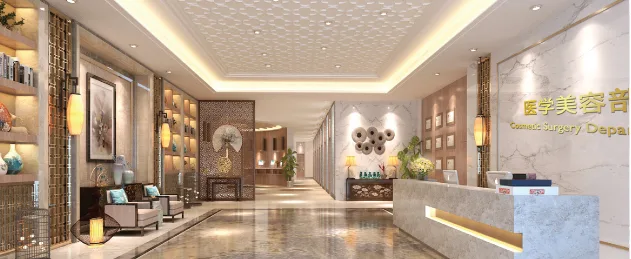
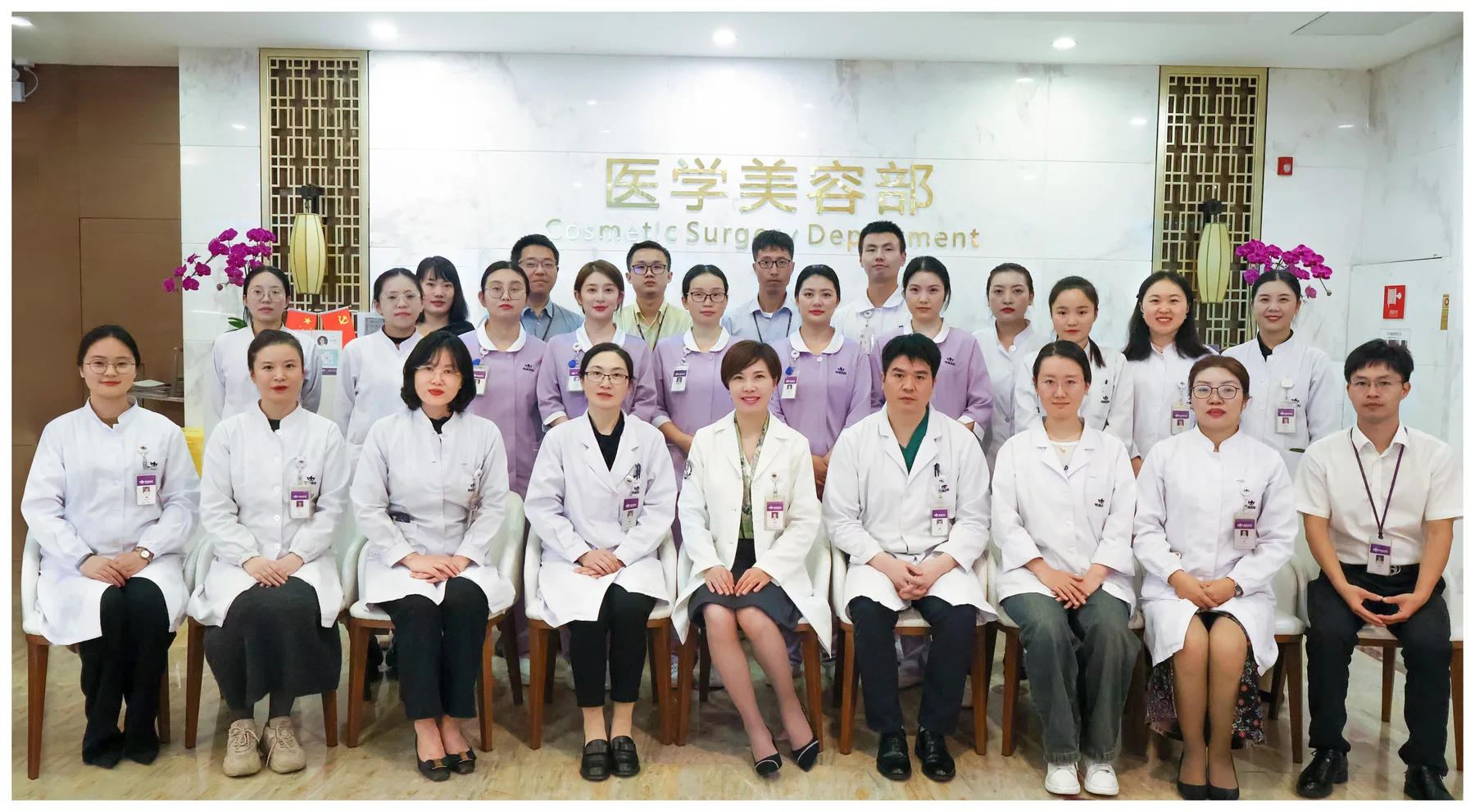
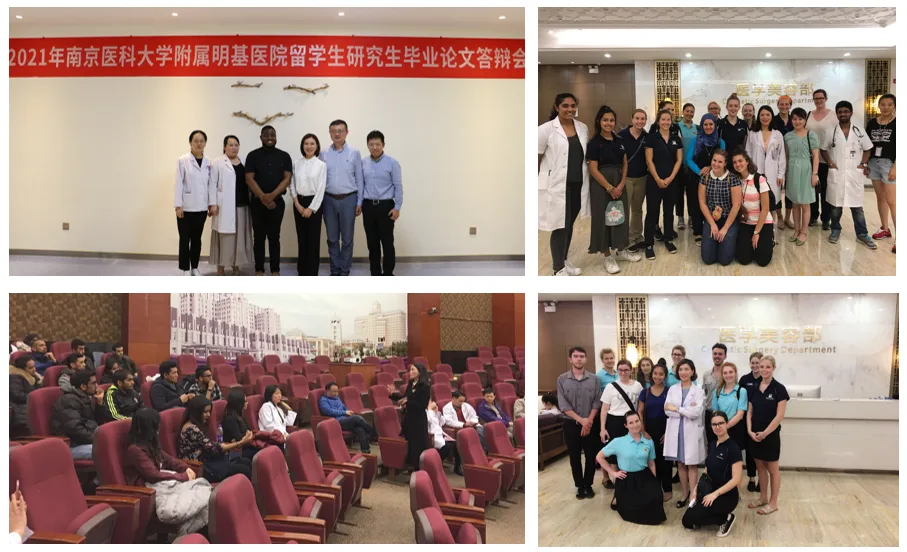
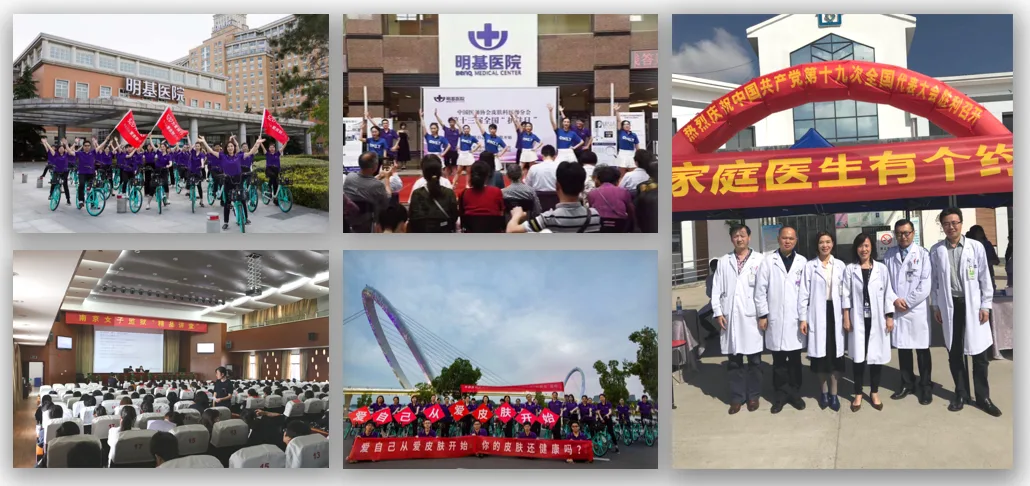
These are places and people belonging to the BenQ department — including the outreach work above. It is the department's own published material, reproduced here as theirs — see where the partnership ends.
Who you would see
The department's published specialist is Dr Wu Haixia, associate chief physician, whose stated scope includes eyelid surgery, eye-bag removal, rhinoplasty, facial contouring, liposuction and fat grafting, injectable treatment, scar revision and intimate-area repair.
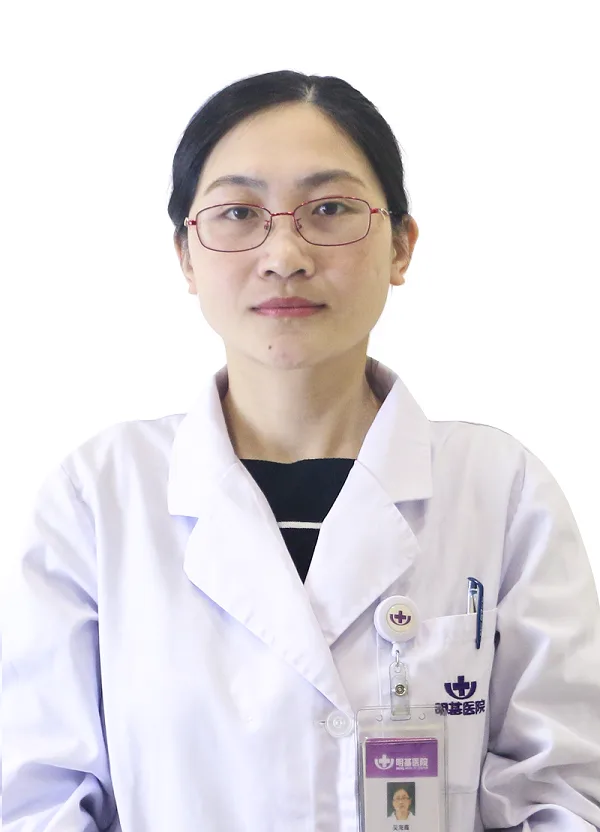
A named physician, not a generic promise
We put a name and a face here deliberately. "A hospital partner" means nothing to a patient deciding whether to travel; knowing which physician the department publishes, and what they say they do, is a fact you can act on.
This physician is the BenQ department's. Your route into their care, and who you would actually see, is something we confirm with you directly — we are not going to imply a specific surgeon on your case before that has been arranged with the department.
Where the partnership ends
A page like this can easily read as a claim that this department is ours, or that everything on it happened at Luowei. Neither is true.
- The rooms, the equipment, the published figures and the outreach work on this page all belong to the Medical Aesthetics Department at Nanjing BenQ Medical Center. Its material is reproduced as the department publishes it, and none of it is presented as ours. The physicians are the shared part: some of the doctors across the five partner departments also work at Luowei.
- Major surgery is delivered by the partner department's own team — its surgeons and its anaesthesiology team, arranged with the department. Which team, and which facility, is confirmed with you in writing before anything is booked.
- We have not independently verified what the department publishes, including the staff count, the device list, the academic record and the regulatory approval status of any individual device. The device section is a transcription of the department's own list, and the manufacturer images shown there are theirs and are not photographs of our equipment or of theirs.
- No clinic times appear on this page, and none are invented. The department's own published material has no clinic-time field for us to copy, and we would not fill a gap like that with a guess. We do not reproduce another institution's booking route either. Ask us and we will confirm the current arrangement with the department.
- We do not compare. This page describes one named partner department. It does not argue that this department, this city or this country is better than anywhere else, and it does not rank this department against the other partners on the partner index.
- Nothing here is a quotation for your care. Which physician you would see, what a procedure involves and what it costs is confirmed with you in writing before anything begins — see pricing for the principle. Where a specific device matters to your decision, ask us for its registration record; see what is licensed in China.
No deposit. No prepayment. You pay at the clinic.
You pay after your in-person consultation, before treatment begins. The price we quote online is the price you pay — in writing.
We do not share the medical details you enter here with advertising platforms.