Thread lift
Thread lifting uses Absorbable medical-grade protein threads (PDO / PPDO / PLLA) Performed at the subcutaneous layer Mechanical lift + triggering…
Real Thread Lift Cases from Our Nanjing Clinic
The following cases document thread lift procedures (PDO / PPDO / PLLA absorbable threads) performed personally by our physician at our Nanjing clinic, addressing facial sagging, jawline laxity, and marionette lines without surgery. All Before & After images are unretouched clinical photographs; each client has signed a written Media Release Form. Individual results vary based on degree of skin laxity and thread selection.
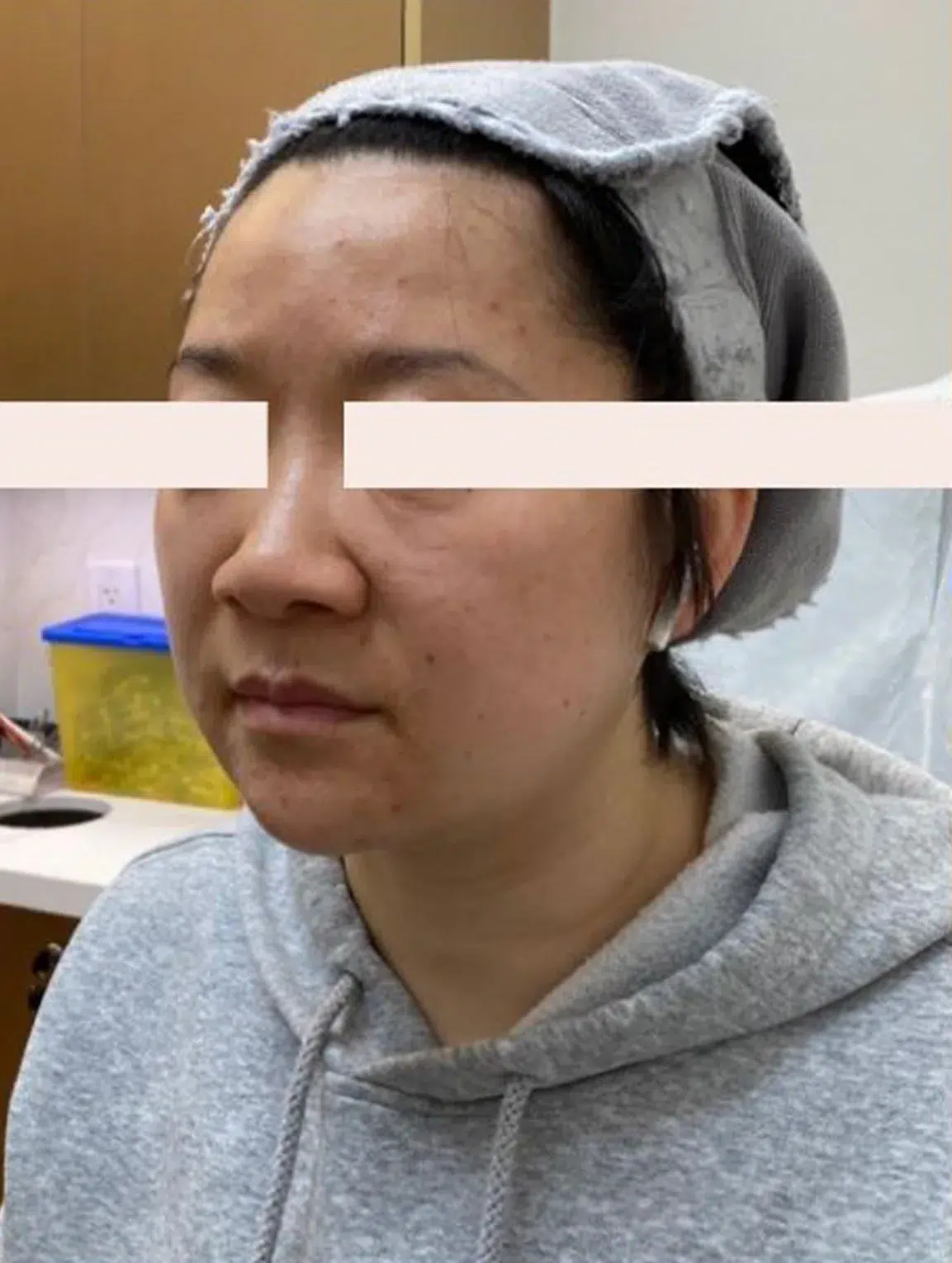
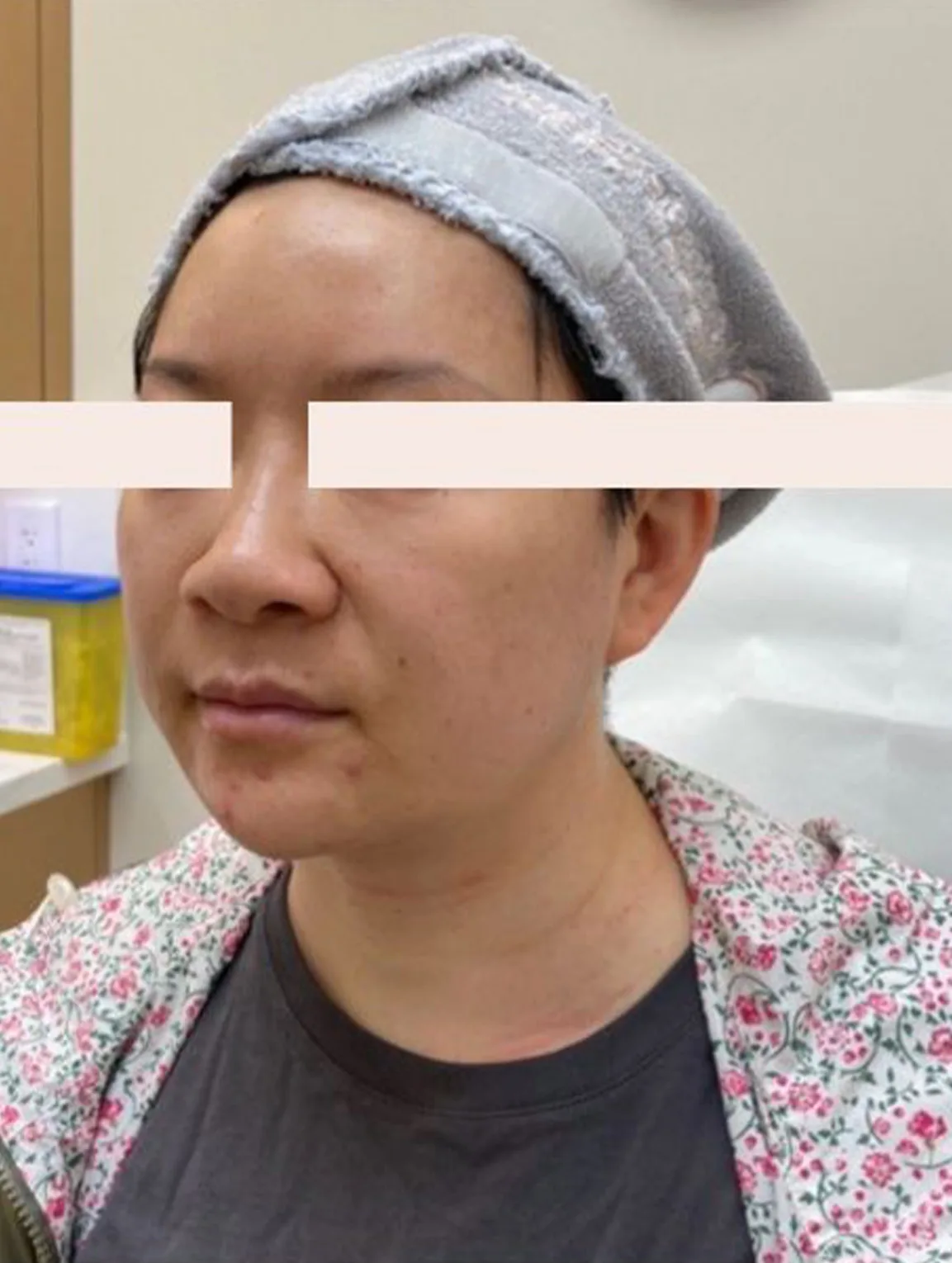
Case 1 · Facial Sagging · Protein Thread Lift
- Client profile
- Asian female · 40 · Mid-face sagging
- Areas of concern
- Descended fat pads and tissue laxity
- Treatment plan
- Barbed threads lift along sagging vectors + smooth threads stimulate collagen
- Treatment outcomes
- Immediate lift + progressive collagen tightening
- Maintenance
- PDO 1–2 years
Case 01: Thread Lift Dual Mechanism — Immediate Physical Lift + Long-Term Collagen Stimulation · Performed by our physician
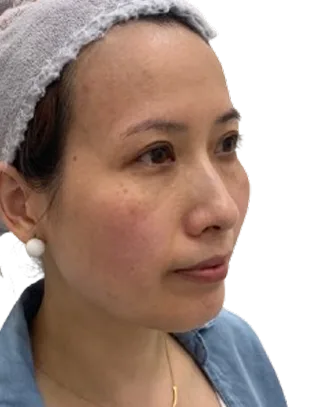
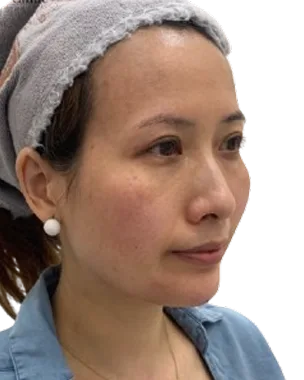
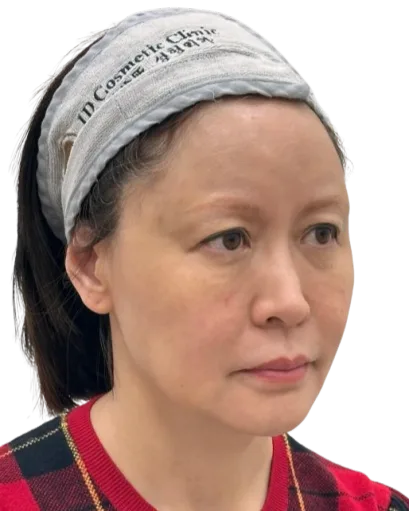
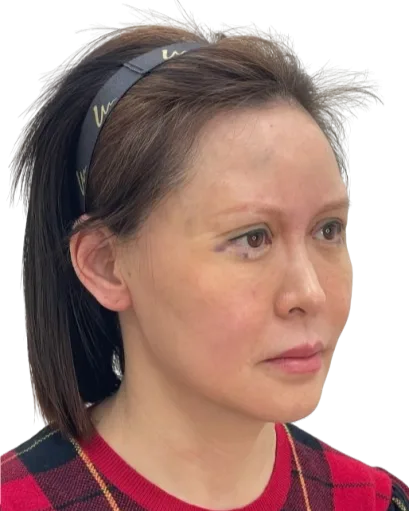
Case 2 · Jawline Laxity · Vector Lifting
- Client profile
- Asian women · Jawline laxity
- Areas of concern
- Loss of jawline definition and facial contour sagging
- Treatment plan
- Pre-auricular anchor point barbed thread lift for the jawline
- Treatment outcomes
- Defined jawline and lifted facial contour
- Maintenance
- 1–2 years
Case 02: Ptosis Vector Analysis Is the Key to Effective Thread Lifting · Led by our physician
Case 3 · Marionette Lines / Downturned Corners of the Mouth · Thread Lift + Juvéderm®
- Client profile
- Asian female · Downturned corners of the mouth
- Areas of concern
- Marionette lines and lower face laxity
- Treatment plan
- Thread lift to reposition lax tissue first → then filler to address residual folds
- Treatment outcomes
- Corner of mouth lifted; fold depth reduced
- Maintenance
- Thread lift 1–2 years / Dermal filler 12–18 months
Case 03: Combination Rejuvenation — Thread Lift + Juvéderm® Filler · Led by our physician
Why Choose Luowei Medical Aesthetics Clinic for Your Thread Lift in Nanjing
Thread lifting carries a higher risk of suboptimal outcomes than injectables — thread direction, depth, and bilateral symmetry all depend on the physician’s skill and experience. Our approach is built on three pillars: precise sagging-vector analysis, a full range of thread options, and every procedure performed directly by the physician.
Sagging-vector analysis
An incorrect lifting direction renders the procedure ineffective. Our physician designs thread vectors and anchoring points based on your individual sagging pattern, ensuring results are truly meaningful.
Full range of thread options available
PDO / PPDO / PLLA and Silhouette InstaLift are all available, allowing thread selection based on desired longevity and degree of lift — not limited to a single option.
Thread placement performed personally by the physician
Thread lift procedures are performed hands-on by our physician, with precise control over insertion depth, symmetry, and thread anchoring throughout — minimizing the risk of visible threads or asymmetric results.
Combination rejuvenation
Specializes in combination protocols integrating thread lifting, dermal fillers, and neurotoxins — addressing lift, volume restoration, and muscle dynamics simultaneously.
Asian facial anatomy
Thread placement designed around Asian fat pad distribution and bone structure for a natural, not “pulled” look “.
Sterile technique and protocol
Authentic threads, strict sterile technique, and comprehensive post-procedure instructions — all working together to minimize the risk of infection and thread migration.
- Full range of thread options available— PDO / PPDO / PLLA / Silhouette InstaLift
- Physician personally designs the lifting vectors and thread placement
What Is a Thread Lift?
Thread lifting uses Absorbable medical-grade protein threads (PDO / PPDO / PLLA) Performed at the subcutaneous layer Mechanical lift + triggering collagen regeneration a non-surgical anti-aging solution that bridges the gap between injectables and a surgical facelift. Barbed / cone threads physically lift lax tissue immediately, while the gradual thread dissolution continuously stimulates collagen production.
Thread lifting offers Dual mechanism: (1) Immediate mechanical lift — barbed / cone threads anchor sagging tissue and reposition it upward; (2) Long-term collagen stimulation — as the threads gradually dissolve, they continuously stimulate fibroblasts to produce new collagen.Results do not disappear immediately once the threads dissolve, A newly formed collagen network sustains the results.
The key differences between thread types lie in Degradation Rate and Duration of Collagen Stimulation: PLLA > PPDO > PDO.
Key takeaways
- Material Absorbable protein threads: PDO / PPDO / PLLA
- Mechanism Immediate mechanical lift + long-term collagen stimulation
- Best suited for Mild to moderate sagging; early-stage laxity
- Maintenance PDO 1–2 years / PLLA 2–3 years
- Anchoring The mid-tier option between injectables and a surgical facelift
- Recovery period short, with possible bruising and swelling lasting several days
How Do You Choose Among the Three Thread Types?
| Thread | Degradation | Key features |
|---|---|---|
| PDO | 6–12 months | |
| PPDO | Slightly slower than PDO | Advanced PDO |
| PLLA | 18–24 months | Long-lasting (Silhouette InstaLift) |
The slower the degradation, the longer the collagen stimulation — and the longer-lasting the results.
Thread Lift Procedure and Mechanism
The physician maps the thread placement paths according to each patient’s unique sagging vectors, then uses a blunt cannula to insert barbed protein threads beneath the skin. The barbs anchor and lift lax tissue immediately, while the threads continue stimulating collagen as they gradually dissolve.
Consultation & Sagging Vector Analysis
Our physician analyzes your sagging vectors, fat pad distribution, and skeletal support to design the optimal lift vectors, anchoring points, and thread types for your anatomy.
Local anesthesia
Local anesthesia is applied at entry points for a comfortable experience; blunt-tip cannulas are used throughout to minimize trauma to blood vessels and nerves.
Placement of lifting threads
Barbed or cone threads are inserted along the planned pathways, anchoring lax tissue and lifting it toward the fixed point — with visible results immediately.
Smooth thread collagen stimulation (optional)
Smooth threads are placed in areas of laxity as needed to further stimulate collagen regeneration and improve overall skin texture.
Progressive collagen reinforcement
As the threads gradually dissolve, they continuously stimulate collagen production. Lifting results stabilize over several weeks and are then sustained by the newly formed collagen even after the threads have fully degraded.
Thread lifts carry a higher risk of suboptimal outcomes than injectables — the physician’s skill is everything.
The outcome of a thread lift is almost entirely determined by Thread direction, placement depth, and bilateral symmetry. When choosing for the first time, prioritize physician experience over price comparison.
Correct lifting vector
Incorrect thread direction = ineffective lift — precise sagging-vector analysis is essential
Appropriate depth
Threads placed too superficially may become visible or palpable; precise depth placement is essential.
Bilateral symmetry
Inexperience can lead to asymmetry; precise treatment design and technique are essential.
Am I a Good Candidate for a Thread Lift?
Ideal candidates are generally between 30 and 55 years of age with mild to moderate facial laxity and early-stage sagging who want a natural lift without surgery. Whether you are a good candidate requires an in-person consultation and assessment.
You may be a good candidate if…
- 30–55 years old, mild to moderate facial laxity
- Early-stage sagging and descended fat pads
- Loss of jawline definition and descent of the mid-cheek
- Seeking a natural lift without undergoing surgical facelift
- Marionette lines / corner of mouth drooping (combined with dermal filler)
- Comfortable with a few days of bruising and recovery
Treatment is not recommended if any of the following apply…
- Severely lax skin (requires surgical facelift)
- Severe keloid-prone skin type
- Pregnancy / breastfeeding
- Active infection in the treatment area
- Coagulation disorder / use of strong anticoagulants (requires evaluation)
- Seeking “Immediate results + long-lasting” results
Different Concerns × Thread Choice / Combination Therapy
| Concern | Treatment plan | Maintenance |
|---|---|---|
| Early-stage mild sagging | PDO Barbed threads | 1–2 years |
| Seeking long-lasting results | PLLA / Silhouette InstaLift | 2–3 years |
| Sagging + volume loss | Thread lift + dermal filler combination | Combined maintenance |
| Sagging + dynamic lines | Thread lift + neuromodulator combination | Combined maintenance |
Thread Lift Treatment Planning
Every treatment plan is personally designed by our physician — including sagging-vector analysis, thread selection, placement mapping, and combination therapy recommendations.
Free consultation and vector assessment
Analyze the sagging vectors and design the lift vectors and thread selection.
Thread Selection and Placement Planning
Select PDO or PLLA threads based on desired longevity, then map anchor points and placement design accordingly.
Thread placement procedure
Threads are placed using a blunt-tip cannula under local anesthesia; each session takes approximately 45–60 minutes.
Post-swelling reassessment / combination
1–2 Reassess after swelling subsides (typically within weeks); combine with dermal filler for volume restoration as needed.
Recovery and Maintenance Timeline
| Duration | Condition |
|---|---|
| D0 (same day) | Immediate visible lift; possible bruising, swelling, and tightness |
| D1–D7 | Bruising and swelling gradually subside; avoid forceful facial expressions |
| 2–4 weeks | Natural lift achieved; tightness resolves |
| 1–3 years | Duration follows thread longevity; results are sustained by newly generated collagen. |
Concerns that thread lifts can address
Thread lifting focuses on physically repositioning lax tissue, making it well suited for mild to moderate sagging and facial contour refinement.
Cheek sagging
Repositioning descended fat pads to restore mid-face volume and contour.
1–2 Years of maintained results
Jawline laxity
Anchored lift from in front of the ear for a sharper, more defined jawline.
1–2 Years of maintained results
Nasolabial folds / marionette lines
Lift lax tissue; often combined with dermal filler for comprehensive rejuvenation.
Combination therapy
Tail of the brow / upper face
Mild brow lift to open up the eye area.
Consultation and evaluation
Neck laxity
Neck thread lift to tighten lax skin.
Consultation and evaluation
Skin quality / firmness
Smooth threads stimulate collagen production, improving skin texture and elasticity.
Gradually visible over several weeks
Seeking long-lasting results
PLLA Long-lasting threads maintain results for 2–3 years.
2–3 Years of maintained results
Combination rejuvenation
Thread lift for repositioning + filler for volume restoration + neuromodulator for dynamic lines.
Combination therapy
Area × Thread Type × Duration Reference Table
| Area | Thread type / treatment plan | Maintenance |
|---|---|---|
| Cheeks / mid-face | Barbed thread lift | 1–2 years |
| Jawline | Pre-auricular anchor barbed thread | 1–2 years |
| Marionette lines / nasolabial folds | Thread lift + dermal filler | Combined maintenance |
| Seeking long-lasting results | PLLA / InstaLift | 2–3 years |
Pre-Procedure Instructions · Treatment Process · Post-Procedure Care
Post-procedure care during the first one to two weeks directly affects thread stability and your final outcome. Please follow these instructions carefully.
Pre-procedure preparation
- Avoid aspirin, fish oil, and other supplements that increase bruising risk for 1 week before treatment (follow your physician’s guidance).
- Avoid alcohol for 24 hours before your treatment.
- Avoid scheduling within 1–2 weeks of an important event (to allow any bruising or swelling to resolve)
- Disclose current medications, allergy history, and any prior facial treatments.
During the procedure
- Local anesthesia at entry points
- Blunt cannula insertion reduces the risk of vascular and nerve injury
- Immediate assessment of lift symmetry
- Approximately 45–60 minutes per session
Post-procedure care
- 1–2 Avoid exaggerated facial expressions, laughing widely, or opening the mouth too wide for the first few weeks
- Do not massage or apply firm pressure to the treated area (to prevent thread displacement).
- Sleep on your back and avoid lateral pressure on the face for several days.
- 2 Avoid saunas, hot yoga, and strenuous exercise for the first few weeks
- Bruising can be concealed with makeup after 24 hours; apply cold compresses as directed.
Recovery timeline
| Duration | Condition |
|---|---|
| D0 (same day) | Immediate lift; tightness + possible bruising and swelling |
| D1–D3 | Peak bruising and swelling; avoid straining facial muscles |
| D4–D14 | Bruising fades; tightness gradually subsides. |
| 2–4 weeks | Natural-looking lift; entering the stabilization phase |
Advantages of Thread Lift Treatment
Immediate lift plus long-term collagen stimulation, positioned between injectables and surgery — but outcomes and safety are highly dependent on the physician’s skill and experience.
Immediate lift
The lifting effect is visible the moment the threads are placed.
Long-term collagen
Thread degradation continuously stimulates collagen regeneration.
Non-surgical
No large incisions. No general anesthesia.
Absorbable
Protein threads dissolve safely and leave no residue.
Faster recovery
Recovery of several days to one to two weeks.
Can be combined with
Combined rejuvenation with dermal filler and/or botulinum toxin.
Long-lasting option available
PLLA Thread effects last 2–3 years.
Natural lift
When vectors are correctly designed, results look natural, not “pulled” look “.
Thread Lift vs. Other Anti-Sagging Options
| Treatment plan | Mechanism | Recovery | Anchoring |
|---|---|---|---|
| Thread lift | Physical lift + collagen stimulation | Several days – 2 weeks | Between injectables and surgery |
| Ultherapy® / Thermage® FLX | Energy-based tightening | None | Skin firmness; mild sagging |
| Dermal filler | Volume restoration | Short | Volume loss |
| Surgical facelift | Surgical excision and tightening | Longer | Severe laxity |
Why Trust Luowei Medical Aesthetics Clinic for Your Thread Lift?
Google's E-E-A-T framework evaluates medical content across four dimensions. Below are the specific credentials behind every statement on this page.
Real-world clinical experience
- Extensive thread lift and combination rejuvenation case experience
- Experience with multiple thread types
- Experience managing thread lift revision cases from other clinics
- Complete Before & After Gallery
- Expertise in Facial Anatomy and Sagging-Vector Analysis
- Experience in combined thread lift and injectable treatment planning
Industry authority certification
- Every medical claim on this page is anchored to a named, clickable source — see Evidence & references below
Transparent and verifiable
- Authentic threads · Sterile technique
- Transparent communication about the limitations and recovery period of thread lifts
A thread lift is “Highly dependent on physician skill” procedure
With the same threads, a wrong vector yields no lift; placing them too superficially makes them palpable; imprecise technique results in bilateral asymmetry.The physician’s anatomical assessment and technical skill, More decisive than the thread brand itself.
Our physician personally designs the lifting vectors and places every thread, and specializes in combining thread lifts with injectable treatments. If you’re considering a thread lift for the first time, choosing the right physician matters far more than saving on cost.
Thread Lift Pricing & Payment
Pricing varies by thread type, number of threads, and treatment area.A personalized quote is provided by our physician following a Free 30-Minute Consultation.
Priced by thread type / number of threads / treatment area
Thread lift + filler combination plans are priced according to the treatment protocol.
- Payment is made at the clinic, after the consultation and before treatment begins
- Nothing is paid in advance, and no deposit is required to hold an appointment
- For your first thread lift, prioritizing physician experience matters far more than finding the lowest price.
- Cosmetic treatment is a self-pay item and is not covered by public medical insurance in China
- All new clients receive a complimentary 30-minute Free Consultation and Assessment
Common Reactions · Serious Risks · Contraindications
Transparency in medical aesthetics is itself a mark of expertise and trustworthiness. We openly share all potential reactions, serious risks, and contraindications so you have complete information before your consultation.
Common Reactions (may occur in the short term)
- Bruising (24–72 hours more noticeable; can be covered with makeup)
- Mild swelling (resolves within a few days)
- Skin tightness / pulling sensation (1 weeks; resolves within weeks)
- Mild discomfort at entry points
Serious Risks (rare but important to disclose)
- Thread migration / thread visibility— Often caused by threads placed too superficially or excessive muscle activity too soon after treatment; requires physician management.
- Bilateral asymmetry— Risks associated with inexperience; adjustable with proper technique
- Hollowing / skin folds— Excessive tightness; typically resolves over time
- Infection / nodule formation— Rare; sterile technique minimizes risk.
Absolute Contraindications (Do Not Proceed)
- Severely lax skin (requires surgical facelift)
- Severe keloid-prone skin type
- Pregnancy / breastfeeding
- Active infection in the treatment area
- Coagulation disorder / strong anticoagulant medication not discontinued (requires evaluation)
Where the medical claims on this page come from
Everything above about Thread lift rests on published evidence rather than on our own word. The sources below are the ones behind those statements: peer-reviewed papers indexed in PubMed, and guidance written for patients by dermatology academies and national health services. Read them before you decide — and bring any of them to your consultation.
- Peer-reviewedA Meta-Analysis and Systematic Review of the Incidences of Complications Following Facial Thread-Lifting
What these references can and cannot tell you. They describe what is known about the treatment itself — how well it tends to work, how long results last, and what can go wrong. They are not an assessment of this clinic, and no published study can tell you whether it suits your skin type, anatomy, or medical history. That judgement comes from the physician who examines you in person, and it may well be “not this one”.